Friday, 27 September 2013

[Build Great Backlinks] “Be the Unexpected” + 8 Other Lessons from Jack Dorsey (Twitter and Square Founder)

Build Great Backlinks


Jack Dorsey isn’t the man you expect him to be.

You may know him as the serial entrepreneur founder of both Twitter and Square. But did you know Dorsey’s also a certified masseuse who dabbled in fashion design?

With Twitter’s announcement that they’re looking to go public and Square getting picked up by Starbucks, Jack Dorsey’s two billion dollar companies are thriving. But Dorsey still takes the bus to work.

There’s a method behind this “unexpected” behavior. Everything Jack Dorsey does, from his never-changing morning routine to his insistence on having “an amazing haircut” is meticulously considered — and his habits and attitudes are the backbone for Dorsey’s continued success. Luckily for us, Dorsey’s come out into the spotlight a little bit in the last couple years and been more willing to share the life and business lessons behind his success.

Who is Jack Dorsey?

square-jack-dorsey-fast-compny

  • born on November 19th, 1976; grew up in St. Louis, Missouri USA (age 36)
  • founded Twitter in 2006;  CEO from 2006-2008
  • developed Square in May 2010 (valued at $3.2 billion by 2012)
  • second-largest shareholder in Twitter
  • net worth estimated at 1.1 billion in March 2013


9 Life and Business Lessons from Jack Dorsey

#1  Play

http://jennisparks.com/

“What really gets me energized is thinking about activity within a city.”

Jack Dorsey to Vanity Fair

Ever since he was a little boy, Jack Dorsey loved the hustle and bustle of city life. He spent hours sitting in front of his parents’ old police scanner, listening in as the ambulances, firetrucks, and police cars reported their movements. By the age of 14, Jack programmed an imaginary city on his family computer for the fun of it.

Ever since, Dorsey has been finding ways to turn his love for tracking city activity into a career. In In high school, Dorsey tried started a bicycle courier service with his brother but it wasn’t meant to be.” We quickly found out that St. Louis had no need for bicycle couriers at all,” Jack tells Techcrunch. By the time Dorsey way in college, he worked in NYC as a programmer for a company that managed dispatch centers for couriers.

Dorsey excelled thanks to his enthusiam for the subject matter:

“You have all these entities roaming about, and they're all reporting what they're doing in real time over a variety of different devices. We had couriers on CB radios, on PDAs, and on cell phones. We had taxis and emergency vehicles with GPS. They're all reporting constantly where they are and what work they're doing, and it's all flowing into this one system that a dispatcher can view in real time on a map. That's what's going on in the city! I thought that abstraction was so cool that I wanted that same thing for my friends."

Still in his early 20′s, Dorsey had followed his play not just to a rewarding career, but to his first billion dollar idea.

#2  Wait for Your Big Idea’s Time to Come

Sometimes put the idea away. That idea will often emerge later.”

John Dorsey

Dorsey first had the idea for Twitter in 2000. But texting wasn’t big yet. The average American sent only 35 texts per month. Dorsey told Vanity Fair, “I quickly learned that… no one else had a mobile e-mail device, so the system was kind of useless.”

Jack decided to pursue a career in botanic illustration instead.

Twitter in 2000 was something that was fun to play with but something I put on the shelf to play with for another day.”

Jack Dorsey

That day came in 2006. Americans were on the verge of sending more text messages per month than phone calls. Jack started Twitter in March 2006 and launched it by July. The time was right and Twitter exploded.

Tracking Twitter’s Growth:

2007:  400,000 tweets per 90 days

2008:  100 million tweets per 90 days

2009:  3rd-highest-ranked social networking site

2010:  50 million tweets per day

2011:  140 million tweets per day;  100 million active users

2012:  200 million active users

2013:  400 million tweets per day

#3  Be the Unexpected

"Expect the unexpected. And whenever possible, be the unexpected."

Jack Dorsey

Who saw Twitter coming in 2006? The list starts and ends with Jack Dorsey.

Look out for surprises and embrace the unexpected.

#4  Career Paths aren’t Always Straight Lines

not straight career path

“I never wanted to be an entrepreneur. I actually wanted to be Bruce Lee.”

Jack Dorsey

Right before launching Twitter, Dorsey was in fashion school designing skirts. He’d already had serious stints as an illustrator and certified massage therapist.

So why did Dorsey settle on programming and entrepreneurship? He told Forbes, “those were the tools I needed to build what I wanted to build.”

Dorsey’s not done making career changes either. He hopes to one day be mayor of New York City. Jack says, “I have to move to New York first, but it is a goal. I think mayors are the ones to watch in the U.S. in terms of government innovation.”

#5  Look for Inspiration in Everyday Life

“Ideas can come from anyone and they can come anytime. We all have various directions that we want to take the company and sometimes those ideas come during a shower, sometimes they come when we're walking, sometimes they come when we're talking with other employees at the coffee store.”

Jack Dorsey, while talking to the Square staff

In high school, Jack worked as a barista at his mom’s coffee shop and saw how much the small business could have benefited from seamlessly accepting credit card payment. The same is true of another teenage job, working for glass artist (and eventual Square co-founder) Jim McKelvey. Dorsey told Fast Company that McKelvey, “lost a $2,000 sale because he couldn’t take credit cards.”

Within these observations were the seeds for Square — and today Dorsey continues to go out of his way to look for inspiration in everyday life. Jack commutes to work by public bus. The reason? It’s so he can observe how people are using their mobile devices firsthand and incorporate their behavior into his company policy at Square and Twitter.

#6  Embrace Routine

mels kitchen cafeDorsey starts every morning the same way:  he eats two hard-boiled eggs with soy sauce and a side of berries, then tweets about it (for his mom’s benefit).

Jack also has his weeks meticulously planned out, as he explained to Fast Company:

“All my days are themed. Monday is management. At Square we have a directional meeting, at Twitter we have our opcomm [operating committee] meeting. Tuesday is product, engineering, and design. Wednesday is marketing, growth, and communications. Thursday is partnership and developers. Friday is company and culture. It works in 24-hour blocks. On days beginning with T, I start at Twitter in the morning, then go to Square in the afternoon. Sundays are for strategy, and I do a lot of job interviews. Saturday is a day off.”

Dorsey links his rigid routine to his “discipline” and productivity.

#7 Don’t be a Jerk

Back in Twitter’s infancy, Dorsey kept a little personal blog. One day, he felt inspired to post 10 life lessons. The blog has since been deleted, but luckily Twitter employee Caroline Mizumoto printed the list out, stuck it on her refrigerator, and posted a picture on her Flickr.

Here are the ten life lessons straight from Jack Dorsey:

(1)  Don’t be a jerk

(2)  Don’t take anyone for granted

(3)  Enjoy the moment

(4)  Be honest, always

(5)  Be humble

(6)  Be kind

(7)  Respect people’s wishes

(8)  Allow endings

(9)  Fail openly

(10) Have an amazing haircut

Starting with “Don’t be a jerk,” an emphatic 6 out of Dorsey’s 10 life lessons involve treating your fellow human beings well.

#8  Have an Amazing Haircut

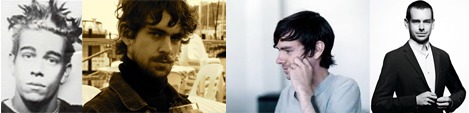
the changing looks of jack dorseyDorsey once had disheveled hair and a facial piercing, but that all changed once he became the CEO of a fast-growing company. “I took my nose ring out after [Twitter's] first round of financing,” says Dorsey.

Jack understood that investors would be judging Twitter’s future based on how he presented himself. Today, Jack keeps his hair trimmed and his suits fitted.

The way you take care of yourself says a lot about you to other people (fair or not). I don’t know about you, but I think it’s time I go out and get a haircut.

#9 Achieve Perfection through Simplicity

simple is beautiful rothko

"Make every detail perfect, and limit the number of details to perfect."

Jack Dorsey

140 characters. That’s all you get on Twitter.

Just like writing a haiku, there’s no room for unnecessary syllables – and Jack wouldn’t have it any other way. Dorsey loves to take a complex idea and begin removing “the conceptual debris… so you can just focus on what’s most important.”

“He’s always been a minimalist,” Ted Dorsey (Jack’s father) says. The elder Dorsey recalls his family moving into a new house and young Jack immediately choosing the smallest bedroom. But minimalism is more than just a character trait; it’s Dorsey’s business philosophy.

Jack can tell you what the companies mean to him in one word. For Twitter, that word is communication (“making that simple and easy”). For Square, it’s commerce. Though Dorsey says “it’s really complex to make something simple,” it’s worth it. Simpler things are easier to perfect and “If we can perfect one experience for one individual, we can scale to every single one of the 7 billion people now inhabiting this earth.”

How Twitter Boosted Income Diary

Income Diary’s success was built 140 characters at a time. When Michael Dunlop founded Income Diary in 2009, Twitter was growing at a “staggering” 1382%. Michael saw an opportunity and started a Twitter account for Income Diary. Soon Twitter was driving “100,000′s of visitors in a month” to Michael’s young blog.

Things have changed a lot since 2009. Twitter is still a powerful promotional tool online, but it’s no longer easy traffic. If you want to drive traffic from Twitter, Michael recommends that you get TweetAdder:

Oh and if you enjoyed this article you should probably Tweet it, right? It’s what Jack Dorsey would want you to do.

The post “Be the Unexpected” + 8 Other Lessons from Jack Dorsey (Twitter and Square Founder) appeared first on How To Make Money Online.


You may view the latest post at
http://www.incomediary.com/unexpected-jack-dorsey-lessons

Build Great Backlinks
Nick
peter.clarke@designed-for-success.com

Friday, 20 September 2013

[Build Great Backlinks] Marketing Lessons from the Top 5 Rapper Entrepreneurs

Build Great Backlinks


I didn’t started listening to hip-hop until 2006, when I discovered The Grey Album. It was a mash-up between Jay-Z and The Beatles. I was hooked.

As I delved deeper into hip-hop, I was surprised to find how many rappers had become very successful entrepreneurs. It turns out Jay-Z’s started his fair share of companies and is worth about half a billion dollars… and he’s not even the richest rapper out there (that info’s below).

Actually, I owe my discovery of the genre to Jay-Z’s marketing savvy. If he hadn’t released a cappella tracks of ‘The Black Album‘, then DJ Dangermouse never would have been able to make the mash-up that kickstarted my love for hip-hop. A willingness to give content away for free in order to broaden your audience is a big part of the marketing strategy for successful rappers and online entrepreneurs alike.

I dug deeper into Jay-Z’s entrepreneurial secrets and soon found more lessons from the top rapper entrepreneurs. In particular, I am going to write about the importance of cultivating your personal brand and how to create a story that works as a marketing tool.

But first, let me introduce my list of the top five hip-hop business people.

Top 5 Rappers Turned Entrepreneurs

#5 Kanye West    a.k.a. Kanye West

#4 Dr. Dre    a.k.a. Andre Young

#3 Jay-Z    a.k.a. Shawn Carter

#2 50 Cent    a.k.a. Curtis Jackson

#1 Diddy    a.k.a. Sean Combs

Yes, Diddy (formerly P Diddy, formerly Puff Daddy) is the richest rapper-turned-entrepreneur of all time. In 2012, Forbes estimated Didd’ys net worth to be $550 million. Of course, Diddy couldn’t have amassed this fortune without first creating a stellar personal brand…

Lesson 1:  Cultivate Your Personal Brand

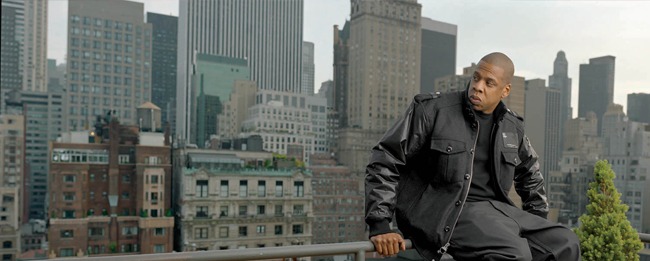
jay-z-dr-jays

“I’m not a businessman. I’m a business, man.”

Jay-Z, from Diamonds from Sierra Leone

Back in 1999, Jay-Z was the coolest guy in the room – and he knew it. His swagger was all over the radio with hits “Hard Knock Life (Ghetto Anthem)” and “Big Pimpin’”. His latest album was selling millions and Jay was starting to suspect he could sell more than just records.

Capitalize on Your Personal Brand

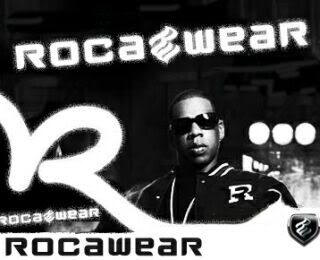
jay-z-rocawear

Enter Rocawear - a clothing company Jay-Z co-founded in 1999 with Damon Dash. Click here to watch the first commercial for Rocawear. Note the ubiquity of Jay-Z’s persona. We’re treated to shots of Jay-Z looking in the mirror while he tells us his personal story:

“I’m a kid from Marcy projects, from Brooklyn… My goal was to have one gold album and that was it. Then it became I wanted to show that artists could ascend to the executive ranks.”

For a large segment of the population, it didn’t matter if Rocawear was selling clothing, cologne, or candy canes:  it was Jay-Z’s, so they wanted it. Jay-Z’s success comes from cultivating a reputation as a cool, successful, and stylish human being – and then purposefully transferring that to his business ventures by association.

"My brands are an extension of me. They're close to me. It's not like running GM, where there's no emotional attachment."

Jay-Z

Rocawear is Jay-Z. Jay-Z is Rocawear. As Jay thrived, so did the company. It turns out people spend a lot more money per year on clothes than on CD’s. In 2007,  Rocawear had $700 million in revenue. That’s when Jay-Z sold the rights to Rocawear to Iconix Brand Group, personally making $204 million in the process. That’s the single biggest score for a hip-hop entrepreneur to date.

Since, Jay-Z has continued to associate with major brands, including The 40/40 Club (restaurant/bar), NBA 2K13 (videogame), and Budweiser (beverage). In April 2013, Jay-Z announced he’ll be launching his only sports agency, Roc Nation Sports.

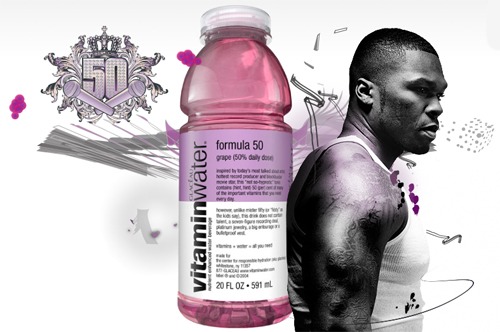
How 50 Cent’s Personal Brand Nearly Cost Him Millions vitaminwater_formula_50_cent In 2004, 50 Cent invested in Glaceau, the Queens-based maker of Vitamin Water. Just three years later, Coca Cola bought Glaceau for $4.1 billion. 50 Cent cashed in big, according to Addicted2Success:

50 Cent was thought to have walked away with a figure somewhere between $60 million and $100 million, putting his net worth at nearly a half billion dollars.

But 50 Cent’s biggest payday almost never happened. The reason? Glaceau had concerns about 50′s personal brand. Joel Brown explains:

“By 2004, 50 Cent was undoubtedly one of the world's biggest pop stars. But it took some amount of convincing… to overcome the trepidation of Glaceau CEO Darius Bikoff and president Mike Repole. 50 Cent's association with gunplay presented a problem: What if their chief spokesperson ended up dead in a rap beef?”

50 Cent averted disaster by showing Glaceau the safer, savvier side of his personal brand:

“The 50 Cent who showed up for his first meeting with Bikoff was surprisingly different from the rapper's public image: calm, respectful and deliberate, without too many flamboyant flourishes.”

The Glaceau executives decided that 50 Cent – the person and the brand – were worth taking a chance on after all. For Vitamin Water, it meant being linked with a rap superstar and a special flavor dubbed Formula 50 (pictured above). For 50 Cent, it meant an estimated 10% share of a soon to be billion-dollar company.

More Rappers with Lucrative Personal Brands

Diddy’s lent his brand to clothing (Sean John), TV Shows (Making the Band), and vodka (Ciroc). For Kanye West it’s been fashion, including a pair of Nike shoes called Air Yeezys. Dr. Dre of course has his headphones (Beats by Dre) and that series of commercials for Dr. Pepper.

21st Century Business and the Personal Brand

It’s no surprise that successful hip-hop artists innately understand the importance of the personal brand. Their art form exalts their identity. Each verse they rap is a first-person monologue that states “This is who I am” in 16 bars.

But personal brands are important for more than just rappers and celebrities. In online business, your about page could make the difference between a successful website and one that doesn’t get enough traffic. Your LinkedIn profile could mean the difference between getting the client and getting rejected.

We like it when we can put a face to a business. Apple became the most valuable brand in the world thanks in large part to the personal brand of their CEO, Steve Jobs. Who can forget those black turtlenecks and circle-rimmed glasses? The world at large loved and trusted Jobs – therefore trusting Apple’s products as well.

Facebook, on the other hand, has suffered from being associated with Mark Zuckerberg’s dubious personal brand, therefore instilling feelings of distrust with Facebook’s brand.

I challenge you to take more responsibility for your personal brand – everything from how you dress to how you conduct yourself in a meeting, over email, and on Facebook. If you’re able to build a reputation for being cool and successful like Jay-Z did, you’ll be able to lend that reputation to your business ventures.


Lesson 2:  A Good Story is the Best Marketing

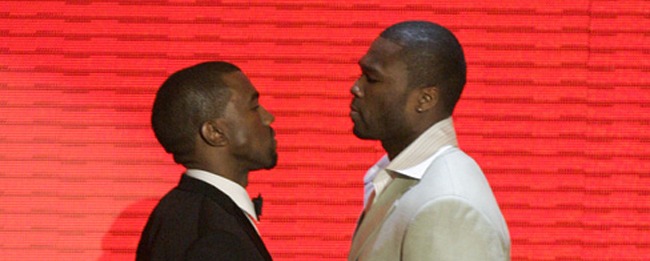
kanye vs 50 cent 1

“[It was] the music industry version of Ali-Frazier, with an avalanche of pre-fight hype to match.”

The Associated Press, via The Daily Illini

In 2007, Kanye West was the second best-selling rapper in the game. Kanye’s last album (‘Late Registration‘) had sold 860,000 copies in its first week.

The best seller? That would be 50 Cent (aka Curtis Jackson), who’s 2005 effort (‘The Massacre’) debuted even bigger:  1.14 million, the third best opening week in hip-hop history.

In an act of typical-Kanye bravado, West pushed the date back of his new album (‘Graduation‘) to the same day as 50′s ‘Curtis‘. Kanye explained why going up against the best was a safe bet, “I was the underdog because I sold less records in the past, so it was a win-win for me. If I lost, everyone would be happy that I even went up against him.”

Throwing Down the Gauntlet

For 50 Cent, the move felt like a challenge to his supremacy. So he made a bet:

"Let's raise the stakes:  If Kanye West sells more records than 50 Cent on September 11, I'll no longer write music… I won't put out any more solo albums."

50 Cent, in a 2007 SOHH.com interview

kanye 50 cent rolling stone cover smaallWith that one comment, 50 Cent turned his product launch into a story… and a media sensation. NBC’s Today declared “50 Cent promises to quit if Kanye outsells him” and many more newspapers, blogs, and fans chimed in around the world. Rolling Stone‘s cover (pictured) asked people everywhere, “Who will be the king of hip-hop?”

The Result:

  • 957,000 sales for Kanye West’s ‘Graduation’
  • 691,000 sales for 50 Cent’s ‘Curtis’

Kanye won handily, but 50 Cent’s week 1 bow was still the second highest of the year up to that point. Both rappers walked away winners according to Jay-Z:

“The rivalry helped both of them. It was definitely one of those moments in the game that was exciting, everybody could pick a side and weigh in on and have an opinion … it garnered a lot of attention.”

So did 50 quit the rap game like he said? No chance. Two years later he was back with ‘Before I Self Destruct

Find a Story for Your Business

“Storytelling is the game. It’s what we all do. It’s why Nike is Nike, it’s why Apple is Apple, it’s why Walt Disney built Disney World and it’s why Vince McMahon makes a billion dollars.”

Gary Vaynerchuk

product, website, or Kickstarter launch isn’t much of a story by itself. But if you can inject elements of drama and intrigue, then you can benefit from increased attention and press coverage like 50 and Kanye did.

Let’s say you’re opening a hamburger joint in a small town. You could send a press release to the local paper saying, “New restaurant opens, offers cheeseburger with lettuce and tomato.”

Or you could send one that says, “New restaurant owner vows to sell more hamburgers than local McDonald’s by end of year or She’ll go Vegetarian.” Now that’s something that the paper might pick up.

When crafting your story, remember that all good stories have conflictcharacters, and something at stake.

What’s Your Story?

top rapper banner


Is there a way to make your business into a newsworthy story? Give a shot a telling your story in the comment section below. If it’s got all the right intrigue and drama, we may just write an article about it here at Income Diary.

I would also like to hear about your personal brand and how you think you can do the best job of cultivating it online.

If you’re interested in a more in-depth look at a rapper-turned-entrepreneur, check out Decoded:  17 Secrets to Jay-Z’s Entrepreneurial Success.

The post Marketing Lessons from the Top 5 Rapper Entrepreneurs appeared first on How To Make Money Online.


You may view the latest post at
http://www.incomediary.com/marketing-lessons-top-rapper-entrepreneurs

Build Great Backlinks
Nick
peter.clarke@designed-for-success.com

Friday, 13 September 2013

[Build Great Backlinks] Elon Musk’s 15 Lessons for Your Startup Business

Build Great Backlinks


I used to think that Elon Musk was just another billionaire entrepreneur.

Now I realize Musk is a super hero. I’m not just saying that because Robert Downey, Jr. used Musk as real-life inspiration for Iron Man’s Tony Stark. I really think Elon has super powers:

  • Musk can predict the future
  • Musk has a super-human intellect
  • Musk has the ability to work forever without stopping

He also has lots of high-tech gadgets, like his own rocket ships and a device with a holographic 3d interface. Elon Musk is a utility belt away from being able to take on super villains.

In all seriousness, Musk is one of the most influential entrepreneurs of the 21st century. If he keeps succeeding at this unprecedented rate, history will know him as the man who ushered in the age of electric cars, solar paneled homes, and private space travel. Below I’ve carefully compiled 15 lessons for business and startups from Elon Musk.

Who is Elon Musk?

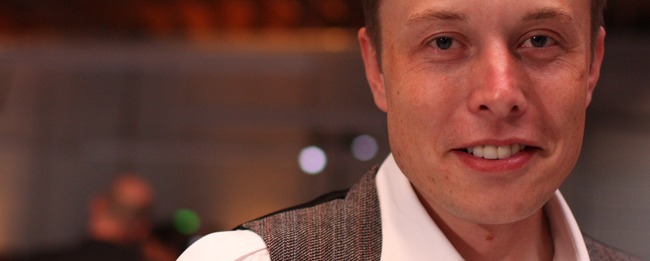
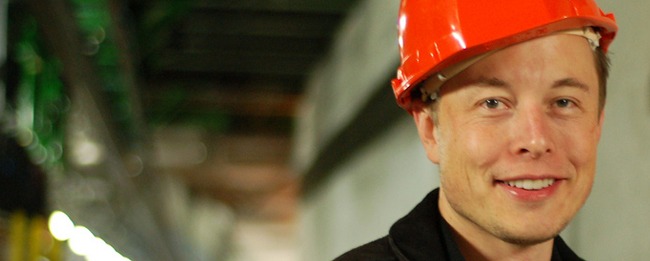
elon musk

  • Elon Musk was born on June 28th, 1971 in South Africa.
  • Musk moved to Canada in 1988 at the age of 17 to avoid service in the South African military.
  • Musk earned undergraduate degrees in business and physics from The University of Pennsylvania.
  • In 1995, Musk dropped out of Stanford University to found his first company.
  • Musk is a twice-divorced father of five.
  • Musk’s job is the CEO of Tesla Motors, the CEO and CTO of SpaceX, and the chairman of SolarCity. His 2013 salary is over $78 million.
  • Musk’s net worth was estimated in September 2013 at $6.7 billion.
  • Like Warren Buffett and Bill Gates, Elon Musk has pledged to give all of his money to charity.

 Photo by Brian Solis, via Wikimedia Commons

Companies Started by Elon Musk:

Musk is one of only two people ever to found three billion dollar companies.

15 Business & Startup Lessons from Elon Musk

#1 Think Out of this World

elon musk think big

“[Elon Musk] is very much the person who, when someone says it’s impossible, shrugs and says, ‘I think I can do it.”

Max Levchin, PayPal Co-Founder

Elon Musk isn’t here just to make companies; he’s here to make history.

His innovations in the auto industry have him being compared to Henry Ford and Jon Favreau famously interpreted Tony Stark (a.k.a. Iron Man) on Musk. The grandiosity of his goals haven’t escaped Elon:

“There was the advent of single-celled life, multicelled life, the development of plants, then animals. On this time scale, I’d put the extension of life to another planet slightly above the transition from life in the oceans to life on land.”

Elon Musk to Inc.

That’s right. Musk just put one of the items on his to-do list on the same scale as the development of sentient life. It’s plausible. SpaceX is seriously planning to be build a greenhouse and eventually a colony on Mars.

#2 Look for Opportunities in Emerging Industries

Musk only starts companies in emerging fields

In 1998, that emerging field was the Internet. Zip2 (and later PayPal) both succeeded thanks in large part to getting in on the ground floor of Internet boom.

Next, Musk identified three more emerging industries and got in on the ground floor on all three. SpaceX (space transportation), Tesla Motors (electric cars), and SolarCity (solar power) have all benefited from the high growth potential and low-competition that comes with being a

# 3 The Quality of the Product Comes FirstTESLA SAFEST

"I'd say stay very focused on the quality of the product.   People get really  wrapped up in all sorts of esoteric notions of how to manage etc., [but]  I think people should get much more focused on the product itself – how do you make the product incredibly compelling to a customer – just become maniacally focused on building it better.  I think people get distracted from that."

Elon Musk, from Rock Solid Finance pioneer new territory.

#4 Be Prepared to Pivot

To pivot in business is a sudden change in direction while keeping one foot grounded where you started.

A strategic pivot is what Elon Musk made when he turned X.com (online bank) into PayPal (a global payment transfer provider). The change rendered X.com totally unrecognizable, but Musk was able to use much of its resources. Those resources included an innovative method of securely transferring money online through the recipients email address, which Musk had developed himself.

The pivot was a gargantuan success:  once PayPal became featured on Ebay, its use exploded.

#5 Embrace an Exit Plan

Can you imagine if Musk had stayed running PayPal? He’d still be rich and successful – but there would be no electric sports cars or rocket ships to his name. Thankfully, Musk long ago learned how to extricate himself from his own startups.

In 1995, Musk founded Zip2 (an online city guide) and in 1998 he sold it to Compaq for $307 million. Musk’s portion was $22 million. He was 28-years-old and free to do whatever he wanted.

That meant founding X.com. Again, Musk jumped ship after a couple of years, selling PayPal for to Ebay in 2002 for a cool $1.5 billion. For his trouble, Musk got $165 million in Ebay stock. Now Musk had enough personal capital to start the pair of truly extraordinary businesses that he still runs today.

When you start a business, you should have an end in mind. Michael Dunlop recently wrote about how to make your website your millionaire exit plan.

#6 Invest Earnings into New Businesses

Both times Musk cashed in a company for millions of dollars, he invested at least 45% of his earnings back into a brand new business within the calendar year.

  • $10 million of the $22 million Musk made from the sale of Zip2 went to founding X.com (later PayPal).
  • $100 million of the $165 million made from the sale of PayPal went to founding SpaceX.

Musk also invested heavily in Tesla Motors (33,076,212 shares) and SolarCity (20,724,991 shares). It’s the ownership of these three companies that constitutes the vast majority of Musk’s $6.7 estimated wealth.

#7 Hire Carefully, Fire Fast

Musk is known to be meticulous about building his staff:

"I think you definitely don't want to grow too fast.   Make sure that every person you hire you really need to hire that person."

Elon Musk

Elon has called hiring people his “biggest single challenge”:

"I have an exceptionally high standard for people that get hired, and especially for SpaceX.  We really aspire to hire quite literally the best people in the world at their job. Finding such people is so hard…  When we find them, we are generally able to attract them to the company… But the number one issue for me is finding superlatively talented people.  I think we've been fortunate to find some very, very talented people at SpaceX, but that is always the governor on growth.”

Elon Musk

He’s quick and unsentimental when it’s time to correct a hiring mistake:

"One lesson I learned [at PayPal] is to fire people faster.  That sounds awful, but I think if somebody is not working out, it's best to part ways sooner rather than later.  It's a mistake to try too hard to make something work that really couldn't work."

Elon Musk

#8 Be Your Own Happiest Customer

tesla happiest customerMusk loves the Tesla Model 6 so much, he’s going to drive in it across the USA next year with his five young sons. On September 5th, 2013, Musk announced via his Twitter:  “Just finalized the LA to NY family road trip route in Model S. 6 day, 3200 mile journey with only 9 hrs spent charging.”

This is more than just a great PR campaign to highlight all of Tesla’s new charging stations across the country. By putting himself behind the wheel of his company’s product for weeks on end, Musk will gain first-hand insight into how to improve Tesla’s premiere electric car.

In the case of SpaceX, Musk gets extra motivation for the company to succeed from his desire too one day be a SpaceX customer. The sooner the better:  “I don’t want to be doddering around up there, needing a quadruple bypass,” he says. His plan is to be a on a rocket to Mars by 2030, when he’ll be 61 years old.

Many great inventions and businesses start because their creator wanted the product for his/her own use. Income Diary founder Michael Dunlop’s PopUp Domination was originally developed for Michael’s own websites before he turned it into a public product.

#9 Make Failure an Option

“Failure is an option here. If things are not failing, you are not innovating enough.”

Elon Musk

Good business decisions are often very safe. But great business decisions are almost always risky.

All of Musk’s business successes have come in emerging industries with a dubious history of turning a profit:  the Internet (in 1995), electric vehicles, space travel, and solar panels. Musk knew going in that there was a high risk of failure, but while he never planned on failing, he always had a contingency plan to allow for failure.

For instance, when Musk set about sending rockets into space, he knew that the first rocket likely wasn’t going to succeed. That’s why he invested enough money into SpaceX ($100 million) to “make failure an option” and allow for up to three launches.

Musk also sees failure as an important part of the creative process:  “If every time somebody comes up with an idea it has to be successful, you're not gonna get people coming up with ideas."

#10 Leadership Requires Putting Yourself Forward

Musk’s leadership was tested like never before on August 2, 2008. It was the day of SpaceX’s third launch attempt and the future of the company was on the line.

falcon 1 launch (USAKA)

The Falcon 1 launch vehicle made it through the first and most most dangerous stage – the one where it actually breaks away from Earth’s gravitational pull. But the rocket faltered soon after and they lost communication. That was it:  mission failed

The 300+ SpaceX employees in attendance were heartbroken – and fearing for their very livelihoods – when Musk stepped up to speak to the crowd. Elon revealed that he had already secured further investment in SpaceX so they would be able to continue their mission in case of complications (again, making “failure an option”). At the climax of his speech, he told his employees not what they should do, but what he was going to do:  “For my part, I will never give up,” Musk said, “and I mean never.”

Dolly Singh recalls the crowd’s response:

“I think most of us would have followed him into the gates of hell carrying suntan oil after that. It was the most impressive display of leadership that I have ever witnessed. Within moments, the energy of the building went from despair and defeat to a massive buzz of determination as people began to focus on moving forward instead of looking back. This shift happened collectively, across all 300-plus people in a matter of not more than five seconds.”

SpaceX’s very next launch was a complete success. On September 28th, 2008 the Falcon 1 became the first privately built rocket to achieve earth orbit.

Photo by U.S. Army Kwajalein Atoll (USAKA) [Public domain], via Wikimedia Commons

#11  Be Driven to Work Hard

elon musk work ethic

“If you don't mind things being really hard and high risk, then starting a company is a good idea. Otherwise, it's probably unwise. It will certainly stress you out. So I think you have to be pretty driven to make it happen. Otherwise, you will just make yourself miserable.”

- Elon Musk

Musk’s work ethic is legendary. “He is a machine,” says Dolly Singh, who worked under Musk as the head of talent acquisition at SpaceX.

Elon is said to regularly put in 100 hours of work week between Tesla and Space X – and he considers this the bedrock of his business success. When asked to give advice to entrepreneurs, Musk offered, “Just work like hell. If other people are putting 40 hour work weeks and you’re putting in 100 hour work weeks, even if you’re doing the same thing, you know that you will achieve in four months what it takes them a year to achieve.”

To aspiring entrepreneurs, Musk doesn’t mince words:  if you’re lazy, don’t waste your time starting a business.

Photo by marcella bona via Compfight cc

#13 Know Your Limits

Musk may be the smartest and hardest working entrepreneur of the 21st century, but even has limits.

Back in 2006, Elon had an idea for a solar panel company. But he knew that if he started it, he would be overextended and unable to give everything necessary to SpaceX and Tesla. So he shared his idea with Peter and Lyndon Rive, who founded SolarCity in July of that year. Musk was the principle investor in the company and has served as chairman of the board since its inception – but he’s kept a safe enough distance so that it doesn’t eat up too much of his time and energy.

Solar isn’t the only industry he sees huge opportunity. Supersonic jets, hyperloops, and virtual reality interfaces have all earned his attention. He’s skimming the surface in these fields, but not diving in headfirst.

#14 Find Your Higher Purpose

Colonizing Mars is much more than a business decision. It’s about the future of the human species:

“I think it’s important that humanity become a multi-planet species. I think most people would agree that a future where we are a spacefaring civilization is inspiring and exciting compared with one where we are forever confined to Earth until some eventual extinction event. That’s really why I started SpaceX.

Elon Musk

Musk used to struggle with his purpose until he found out what really mattered for him. He described the realization:

"I always had an existential crisis, trying to figure out 'what does it all mean?' I came to the conclusion that if we can advance the knowledge of the world, if we can expand the scope and scale of consciousness, then, we're better able to ask the right questions and become more enlightened. That's the only way to move forward."

Elon Musk

#15 Start Businesses that Align with Your Higher Purpose

Musk’s mission to “expand the scope and scale of consciousness” has had him looking beyond simple profit benchmarks to found businesses that are making a global impact for good. Every day when Musk goes to work, he knows he’s helping to reduce carbon emissions, produce renewable energy, and help save the human race in case of collision with an asteroid.

How’s that for motivation?

The first step to leaving a legacy is to answer Musk’s existential question for yourself:  “What does it all mean?” When your business is aligned with your purpose, you will work harder, smarter, and better to achieve your goals.

Inspired Yet?

If you want more lessons from legendary entrepreneurs, check out our articles on Richard Branson and Steve Jobs.

The post Elon Musk’s 15 Lessons for Your Startup Business appeared first on How To Make Money Online.


You may view the latest post at
http://www.incomediary.com/business-startup-lessons-elon-musk

Build Great Backlinks
Nick
peter.clarke@designed-for-success.com

Tuesday, 3 September 2013

[Build Great Backlinks] The Most Profitable Year of My Life, Thanks to Google [Webinar Replay]

Build Great Backlinks


A few weeks ago I did my first ever Webinar in the marketing world after being asked to speak to members of a community called Link Club. This is 80% of what I spoke about on that live webinar, replayed for you here in a new video. The reason I’ve taken 20% out is simply to give their audience something unique as a thank you for motivating me to put together a webinar in the first place. I don’t think it would be fair to repeat things word for word here.

That being said, there’s still a ton of stuff I hope you can take away from this. Nobody on the internet is sharing more than what I’m giving you in my latest posts, and especially this one where I share:

  • My favourite place for getting SEO case studies I don’t see anyone talking about
  • Exact backlinks to one of my websites
  • How I abused Google’s Freshness algorithm (and my traffic jumped up)
  • How I rank for any phrase I want in iTunes


If you’re reading this in your inbox or a feed reader, click here to go to the post

Feel free to hit the full-screen button if the video size is a little too small for you. I kept the quality quite high so it should still look good on your screen. Please do let me know what you think of this in the comments. If the reaction is good, Diggy is going to share his ‘Future of SEO’ webinar in the next few weeks

P.S. Closing the doors to my ‘private SEO circle’ in less than 48 hours. This is the last time I’ll mention it for at least a few months so send me an email to hq – AT – viperchill.com if you’re interested :)


You may view the latest post at
http://www.viperchill.com/webinar-replay-1/

Build Great Backlinks
Glen
peter.clarke@designed-for-success.com

Friday, 30 August 2013

[Build Great Backlinks] How to Become a Traveling Nomad Entrepreneur in 5 Steps

Build Great Backlinks


Imagine visiting a new town every day, skipping from one country to another over the course of a few weeks.

Sounds like an ideal vacation… but it’s an even-better job.

More and more people are making the decision to become a location-independent, traveling entrepreneur. Below I’ll walk you through how to become a “digital nomad” in five steps.

#1 Save up Money

money money money money

Before you jump out of an airplane, you strap on a parachute. Before you hop on the nomad trail, you make sure that you have some cash saved up so that you can ride out the rough patches.

“Put your head down and put away some money," advises Matt Wilson (Under 30 CEO). He continues, "You need some savings… as a buffer if you are going to make a long-term habit of living outside of the United States."

How much Money Should You Save?

The answer depends on (A) the cost of living per month where you’re going, (B) the cost of travel to/from this location, and (C) how much your willing to go without luxury and security. You’ll also want to consider the travel cost of renewing your visa every 30, 60, or 90 days.

Let’s say I want to begin my nomad life in Costa Rica. I’m going to need at least enough money for the flight to and from Denver (about $600). Then I’ll need about $500 for the first month of food, lodging, wifi, and bus fare. Then it’s just a matter of how much I would want for luxuries (about $100) and a "rainy day fund" (let’s say $2800).

For this example, I would save up $4000 before buying my ticket to San Jose. Depending on where you’re at in life, that may seem like a fortune or chump change.

Given the risk of your laptop breaking, you needing medical attention, or your best friend getting married back home… it’s always a good idea to save up more money than you think you’ll need.

…or Don’t

"Leap and the net will appear."

Zen saying

Like to take risks? Thrive under pressure?

If so, you don’t have to save up much money before you start. John Bardos of Jet Set Citizen had just $1000 dollars to his name when he arrived in Japan and began his life as a nomadic entrepreneur. Bardos hit the ground running and never looked back. He says, "It was easy because I had nothing to lose."

Not having a financial safety net will motivate you to succeed, since you won’t have any other choice. Still, I recommend you have at least enough money for one month’s rent and transportation to get home at all times.


#2 Get the Essentials

device

Some items are no-brainers. If you’re a photographer, obviously you’re going to need your camera. Most everyone is going to need a laptop and a padded bag for it. Of course, you won’t forget your toothbrush.

Here are some essential items and resources that you may not have thought of:

External GPRS/EDGE/3G USB Modem

These little doodads plug into a USB port and turn a cell phone data network into an Internet connection. This vastly expands the number of locations you’ll be able to work while traveling.

Theft Protection Software

For most digital nomads, their laptop is their livelihood. But the value of electronic devices also makes them attractive to thieves.

If your laptop, tablet, or smart phone is ever stolen or misplaced while traveling you’re going to wish you had a way of locating it remotely. Prey anti-theft software is just that. Registering up to three devices is free and it only takes a couple minutes.

Online Backup

Services like Mozy offer regular cloud-based backups in case anything goes awry. For one computer, it can cost as little as $5.99 per month (about $72 per year).

External Hard Drive

As a video producer, my work eats up Gigabytes like PacMan eats dots. For me, an external hard drive is the cost of doing business.

But even if you don’t need an external hard drive for the storage, you should have one for a backup. Online backups are great, but you won’t always have access to a consistent, high-speed Internet connection.

You can pick up a 1TB external hard drive for under $100.

Pocket Notebook

When you’re hiking the Himalayas, you may not have your laptop handy. Ditto for when you’re laying on the beach.

But those are both times when you’re likely to feel inspired and creative. Always have a notebook on you and you’ll always be able to catch lightning in a bottle for your business – even when it strikes in the most remote of places.

A Grasp of the Language

A few important phrases in the native language goes a long way. I’ve personally used DuoLingo to sharpen up my Spanish. It’s amazingly robust (and free!) language learning software.

Unless you’re fluent, pick up a travel-sized phrasebook. Once you’ve settled in, look around for a tutor. One-on-one lessons are highly effective and may be surprisingly inexpensive.

Eliminate the Unnecessary

I just listed some of the things you’ll need to have as a digital nomad, but the list of things that you’ll need to lose is even longer. It’s important to travel light. You’ll probably have to shed the majority of your possessions unless you’ve got some generous friends/family with a big garage.


#3 Choose a Starting Location

Here are a few of the more popular countries for digital nomads:

- Thailand

- Cambodia

- Argentina

- Columbia

- Laos

- Vietnam

- Malta

- Costa Rica

There are hundreds of different factors to consider, but ultimately there’s no “best” country for digital nomads. Whether you carefully weigh your options or picking a starting location at random, the most important thing is having the right attitude (and a wifi connection, of course).

#4 Find a Reliable Location-Independent Income

Earning money is about providing value to others. The Internet has made it possible to provide value to people who live very far away from you, all around the world. It isn’t easy to do, but it is easier than ever before – thanks in part to sites like Income Diary that are completely devoted to teaching people how to make money online.

Many nomad entrepreneurs have single-person businesses that are based on providing a service (much like freelancing). This is the quickest path to being able to finance a nomadic lifestyle. If you’re interested in this path, I’ve written a guide on how to make money with a service business and another on how to attract leads and clients online.

Here are some of the more common fields for nomad entrepreneurs to take up:

The Written Word

The market for people who can write high-quality blog posts has never been larger. You could finance a modest lifestyle in many countries by writing four articles like this one per month. Of course, this job also requires an understanding of online publishing, SEO, photo-editing, and more.

There’s also work to be found transcribing, editing, and translating text.

Digital Media Specialist

If you’re a graphic designer, web developer, or software programmer, you know that there’s not much difference between working 10 miles away from your client or 1000 miles away.

Photography and video production are also well-suited to location-independence. Plus, you’ll surely find plenty of inspiring vistas to capture on your travels.

Remote Work Agreements

Increasingly, businesses are allowing their employees to work remotely. It saves on office space and can lead to higher employee satisfaction and productivity. If you’ve already got a good job and you don’t technically need to be on-site to do it, consider asking your boss if you can work remotely.

Passive Income

Developing a passive income takes more time but also offers a greater reward at the end. Create a great website, cultivate an audience of people who trust you, and you could one day make a six-figure income by selling ad space and products.

The List Goes On…

Nomadic jobs are only limited by your imagination. Nunomad’s list of location-independent careers includes everything from the bizarre (balloon artist) to the mundane (insurance agent) and everything in between (consultant, coach, camel trainer, radiologist, property manager, virtual assistant, English teacher, dancer, and importer).

#5 Hire a Virtual Staff

What’s the fun of traveling the world if you have stare at a computer screen eight hours a day, five days a week? Most businesses require daily attention to keep running smoothly – and if you’re on safari in the Serengeti, that’s just infeasible.

The solution: a virtual staff to pick up the slack.

I’ve never hired a virtual staff member myself, so this section is reinforced by one of the world’s leading experts on outsourcing, Tyrone Shum. Back in 2005, Shum started an online Dragonboat paddle business. Business was so good that Shum was working 60 hours a week. That’s when he decided to hire a virtual staff. Within six months, Tyrone was working just 10 hours a week.

Use a Virtual Staff-Finding Service

If hiring someone who lives in a different country to be a part of your business sounds like a daunting task to take on on your own, you’re right. Tyrone Shum told us about his misguided first attempt:

"When I first started, I spent weeks on end trying to find the right person, to negotiate the best price, the best working conditions, and all that kind of stuff. But in the end, they didn’t even stay."

from Web Domination 20

After this, Shum turned to a virtual staff-finding service and he’s never looked back. He recommends Virtual Staff Finder: "They go through the whole process and you pay a one-time fee. They come back to you with three candidates, you meet them and find out if they’ve got the right skills for you, and then – bang – you’re up and away."

Start with a Virtual Assistant

Eventually, you may want to hire a whole staff: programmers, designers, writers, and more. But Shum says that "the first position to outsource is a virtual assistant." Virtual assistants can do anything from handling your emails to maintaining your blog to running your social media.

They give you more time to focus on growing your business – and allow you the freedom to go on adventures without the gears of your business grinding to a halt.

How much does it Cost to Hire a Virtual Assistant?

The price is always in flux. Shum told us that when he started the going rate for a full-time virtual assistant was "roughly $300 a month" but that the price had already crept up to $450/month.

More skilled positions, like web developers, will be a bit pricier.

Note: If you’re really serious about outsourcing, I recommend you check out our interview with Tyrone Shum in Web Domination 20. He goes into detail about his hiring process, his management style, and what he’s learned to look for in a virtual staff candidate.


Ready to Become a Traveling Nomad Entrepreneur?

Then book your flight and pack your bags! If you’re still not sure what you want out of your work and life, you may want to check out our page on how to get your ideal lifestyle as an entrepreneur.

Post Image Photo Credit: Claudio Vaccaro.

The post How to Become a Traveling Nomad Entrepreneur in 5 Steps appeared first on How To Make Money Online.


You may view the latest post at
http://www.incomediary.com/how-to-traveling-nomad-entrepreneur

Build Great Backlinks
Nick
peter.clarke@designed-for-success.com

Wednesday, 28 August 2013

[Build Great Backlinks] 2 Million Backlinks and 15 SEO Answers from Google’s Matt Cutts

Build Great Backlinks


2-million-linksI’ve covered some pretty controversial topics in recent weeks when it comes to SEO. Revealing I’m a scammer, showing how freshness is being abused and then doing a follow-up blog post to show the same again. Though at times it may seem like I’m being a bit harsh on Google, I have acknowledged that the job their staff have must be one of the hardest in the world. Trying to defend yourself against thousands (millions?) of people who are focused on nothing more than gaming their system on a daily basis.

I still feel though that the search results from 2011 and 2012 are just far better than what we’ve seen in 2013. Google should not be getting tricked by people simply changing the date on a blog post and thinking that it’s suddenly fresh and deserves better rankings. There’s also no doubt in my mind that Youtube has a huge algorithmic preference over other video platforms like Vimeo, Wistia & DailyMotion, no matter what Google say about keeping things fair.

My original plan with this blog post was just to share with you the answers from the Webmaster videos that Google share on their channel which are primarily hosted by their head of web spam, Matt Cutts. Then my brain went off on a bit of a tangent and I wanted to cover how much you can really trust about what Google themselves preach. Their head of webspam, Matt, is someone who has no doubt made millions of dollars from his Google stock options (he joined 13 years ago) so my only prognosis is that he genuinely enjoys his job and the intelligent people he gets to work with every day.

google-early-days

On the face of it, you have to give Google credit for making the effort. They don’t really have to give any advice to SEO’s or webmasters; they can just ignore the whole lot and I honestly don’t think it would impact their search market share. Good luck convincing your friends outside of search to start using Bing or Yahoo anytime soon. On the other hand though, it’s also clear to see that most of the videos are just a PR stunt for Google, trying to encourage their ideal internet to make their own jobs easier.

The biggest thing that stands out to me from all of these questions and answers on their Youtube channel is just how scared of SEO the general webmaster seems to be
. So much talk of penalties, the disavow tool and updates like Penguin and Panda have put the ‘mom and pop’ on the back foot and worried about doing literally anything to their site.

15 SEO Answers Directly from Google’s Matt Cutts

webmaster-videos

Whether they give you information you can actually use or should take with more than a grain of salt is debatable, but I recommend every internet marketer who focuses on search to at least watch and read the information Google put out there. It can be a little tedious to go through lots of 5 minute videos from their Webmaster Help Channel, so I did it for you and put the answers together here.

Is load speed a more important factor for mobile? Is it really something that can change your rankings, all other things being equal?

“All things being equal, if your site is really really slow, we do use page speed in our rankings. All things being equal, then yes, a site can rank lower. Look at your neighborhood of websites and if you’re the outlier – your site is very very slow – then you may rank lower.

It’s not that in mobile we apply that any more or any less for desktop search.”

What should we do with embeddable codes in things like widgets and infographics? Should we include the rel=”nofollow” by default?

“My answer is coloured by the fact that we’ve seen a ton of people trying to abuse widgets and abuse infographics. We’ve seen people with a web counter and they don’t realise there’s links with mesothelioma in there. I would not rely on infographics and widgets as your primary way to gather links. I would recommend putting a no-follow, especially on widgets. Depending on the scale of what you’re doing with infographics, you might want to put a rel=”nofollow” on those as well”

What can I do if someone – like my competition – is trying to harm me with bad backlinks?

“You’ve done the right thing; you got in touch with site owners and you’ve said look, please don’t link to me I don’t want to have anything to do with your site. If those folks aren’t receptive then just go ahead and disavow those links. As long as you’ve taken those steps you should be in good shape.”

As memorable .com domains become more expensive, developers are choosing alternate new domains like .IO and .IM which Google geo-targets to small areas. Do you discourage this activity?

“You can pick any domain you want, but if you pick a domain like .ES or .IT because you think you can make a novelty domain like Google.it – “Google it” – or something like that, do be aware that most domains at that specific level do pertain to that specific content. We think that content is going to be mainly intended for that country.

There are a few country code top level domains that are sort of generic because, for example, .IO stands a for something related to the Indian Ocean but there were very few domains that were actually relevant to that. We might go ahead and say okay this is a generic country code level top level domain.”

How does Google treat hidden content which becomes visible when clicking a button? For example a page to buy something then a “show details” button which shows more information.

“If you’re using a tiny little button that people can’t see and there’s 6 pages of content buried in there that users can’t see and that’s keyword stuffing, then that is something we could possibly consider hidden text and probably would consider hidden text.

In general if you just have an ‘ajaxy’ sort of site and things get revealed and you’re trying to keep things clean, that’s not the sort of thing that’s going to be on the top of our list to worry about because a lot of different sites do that. It’s pretty common on the web.”

How does duplicate content that’s legally required (i.e Terms & Conditions across multiple offers) affect performance in search?

“I wouldn’t stress about this, unless the content you have that’s duplicated is spammy or keyword stuffing or something like that I wouldn’t worry about it. We do understand that various places across the web do need to have disclaimers and various legal information.”

Should a customer with 20 domain names link them all together or not, and if he does should he add no follow to the links?

“First off, why do you have 20 domain names? *Giggles* If it’s all cheap online casinos or medical malpractice in Ohio, having 20 domain names there can look pretty spammy and I would probably not link them all together.

On the other hand, if you have 20 domain names and they’re all versions of your domain in different countries then it can make sense to have some way to get from one version of the domain to another version. Even then I wouldn’t link all of the domains in the footer, all by themselves. I would probably have one link to a country locator page on the main .com.”

A client got unnatural link warnings in September 2012 without any example links. 90% of links were removed and I asked for examples in every reconsideration request. Shouldn’t it be better to have live / cached “list” of bad links or penalties in Google Webmaster Tools?

“We’re working on being more transparent and giving more information in messages as we can. I wouldn’t try to say “hey, give me examples” in a reconsideration request (RR) because a RR will read what you say but we can only really give a small number of replies.

Yes the RR has been granted or no you still have work to do. There’s a very thin middle ground which is ‘your request has been processed’. That usually only applies if you have multiple web spam actions.”

If my site goes down for a day, does it affect my rankings when this happens?

“If it goes down for a day then you should be in good shape. If it goes down for two weeks then there’s a better indicator that your site is actually down and we don’t want to send users to a site that is down. If it was only just a short period of downtime I really wouldn’t worry about that.”

If I write about another article, where should I link to the original source?

“Whatever way you choose to do will work fine for Google’s ranking because the link – whether it’s at the bottom of the article or whether it’s in that first paragraph – it still flows pagerank either way. Credit will flow to the website that you’re referring to.

For my personal preference, I prefer when a link is relatively close the top of the article.”

Which aspect of Google updates do you think the SEO industry simply won’t get? Where do you see many SEOs spending too much energy on when they could be taking care of other things?

“One is the difference between an algorithm update versus just a data refresh. When you change an algorithm the signals that you’re using and how you weight those signals are fundamentally changing. When you’re doing just a data refresh, then the way that you run the computer program stays the same but you might have different incoming data or refresh the data that the algorithm is using.

I’ve seen a lot of accusations after Panda and Penguin that Google is just trying to increase its revenue. Let me confront that head on. Panda, if you go back and look at Google’s quarterly statements they actually mention that Panda decreased our revenue.

A lot of people have these conspiracy theories that Google is making these changes to make more money. Not only do we not think that way in the search quality team, we’re more than happy to make changes which are better for the long-term quality of our users.

A lot of people think about “how do I build more links” and they don’t think about the grander global picture like how do I make something compelling and then how do I make sure that I market well. You get too focused on search engines and then totally miss social media and for example social media marketing.”

Why does Google continue to present multiple results from one domain on a search result?

“In the past it was the case that you could search for ‘antique green glass’ and all of the results might be from one domain and that was kind of a bad experience. We introduced something called host clustering which means for each hostname – so like per subdomain – you only get two results.

We then saw people – spammers and bunch of different webmasters adapt – say “ok, do a bunch of different sub-domains and get two results from one hostname, two results from another hostname” and they can get back to crowding up the whole results page again.

We changed things again because we do want diversity in our search results and we made it such that you can get results from one domain then another result from one domain then other results from that domain get progressively harder and harder to rank.

We then made another change not too long ago where we say – if someone is searching for rental cabins in Tennessee – and there’s a really good website about that it may be helpful to show more than just a few results from that domain.

Once you’ve saw a cluster of results from one domain, once you go through subsequent pages we wont show you that domain again so that should help improve the diversity.”

What does Google think of single-page websites? There are some great websites using only a single page (& lots of CSS and Javasvcript) bringing the same user experience as a regular website with many subpages?

Google has gotten better at handling javascript and a lot of times if you’re doing some different or strange JavaScript interaction or having things fold in or out we’re pretty good at being able to process that. In general I wouldn’t bet your SEO legacy on this one single page working well.

If it works for you and users to have that all on one page, for the most part it should work for Google as well.”

Do Google take action on sites that do keyword stuffing (with phone numbers)?

The answer is yes we do. We get a lot of complaints about that. When you type in a phone number of you just get page after page after page of those cookie-cutter sites you get really annoyed and we hear those complaints internally within Google. We treat it basically as keyword stuffing as you’re repeating very similar words after each other – just like someone throwing a dictionary up on the web (but with numbers).

We do consider that web spam.”

Matt’s Comments in a Video about Negative SEO

“We try to think about whether there’s a way that person A could hurt person (competitor) B. We try really hard to design algorithms which are robust and resistant to that sort of thing.

At the same time, a lot more people are thinking about their backlinks…what if people try to do negative SEO? Where they point links at a site to try and make that site rank lower. In my view there are very few people who talk about negative SEO and fewer who try it and fewer still who actually succeed.

We’ve just uploaded a Disavow tool which allows people to upload a text file of links and say “I would like Google to ignore these links to my site.” If you’re someone who wants to do Negative SEO it’s probably a much better use of your time to try and do something productive.”

How Much Can We Take Seriously?

google-answers

It really shouldn’t come as much of a surprise to you that spamming Youtube to death works pretty well after my last few blog posts, but it’s a shame that it happens in such prominent industries. And even more of a shame when it comes from networks that Google definitely seems to know about.

First came the tweet from Matt:

matt-russian

I didn’t actually catch this at the time (hat tip to GOS) but it definitely went viral among the Blackhat forums which you can see with pretty much any Google search on the topic. Many of them who relied on Russian link networks started getting a little worried.

Further confirmation came a month later when the highly respected Barry Schwartz covered the topic on Search Engine Land. SEL is without a doubt the most respected publication when it comes to search engine news, so it wasn’t hard to put two and two together judging by the dates on the tweet and their post.

sape-penalised

It’s easy to think when you read something like this that you should totally stay away from any of these networks. Especially when they’ve been called out specifically. I mean something so public surely isn’t going to work in Google anymore is it?

How’s this for irony. Let’s look at two popular SEO related search terms. These are arguably some of the most competitive search terms on the web not because of their search volume (although they do get 40K+ exact searches per month) but because you’re literally competing against other people who consider themselves to be among the best at getting top search engine rankings.

And what do we have ranking number #1 for ‘SEO Company’?

seo-copmany
Note: I did edit this screenshot to remove the Adwords ads but didn’t alter the positioning of results

An awful Youtube video. I use proxies any time I perform these kind of searches and I’m not logged into Google. The comments I’ll show you in a second clearly prove I’m not the only one seeing these results either. They might change in a few days from this post – I don’t know – but the ones I’ve called out in recent blog posts over the last few months haven’t changed.

Let’s put in another search term like ‘SEO Services’ which gets over 40,000 exact searches per month. It’s a pretty ideal buyer’s keyword if you’re looking for SEO clients:

seo-services

So where are these links coming from? Well, you can of course start digging into the backlink profile, but other members of the SAPE network pretty much give it away themselves:

sape-comments

And if you’re not convinced, tell me when you last saw such a natural link profile like this one below. Over 2 million backlinks in such a short period of time, more than likely from the SAPE.ru link network.

2million

Please be aware that there are a lot of imitators in Google trying to rank for the name of this network to get customers because of how well it works. They are not the service I’m referring too here. We’re focusing solely on the Russian network that was supposedly taken down and ‘dealt’ with already.

I could do this stuff all day long. Oh wait, I do. The list of examples I have is mind-blowing.

As a side note: My ‘private SEO circle’ is opening 20-30 new places on September the 2nd (will probably max out after an hour or two) so send me an email to HQ @ name of this website if it’s something you might be interested in.

The Google PR Spin

I really wanted to leave some feedback after each Matt Cutts’ answer but I didn’t want to ruin the flow of your reading. Comments like “[don't do negative SEO] it’s a much better use of your time to do something productive” and “just go ahead and disavow those links” aren’t exactly ideal to me when you consider that Google don’t show all of the bad links they supposedly know about pointing to your site. With great timing, Jim Boykin shared some responses from an interview he just did with Google’s John Mueller over Google Hangouts. Here are some of the main takeaways:

  • Google supposedly have technical limitations for how many ‘bad links’ they can show in Webmaster tools (1,000 links from 1,000 domains) – I find this hard to believe by the way
  • Don’t think you’ll get help from Google on this when Matt commented above that you shouldn’t expect people who handle reinclusion requests to send you example links
  • It’s up to you to disavow links even if they’re from sites that scraped content from those that already link to you
  • The links in webmaster tools in many cases are years old and rarely get updated (this is from Jim’s experience, not mine) making the job even harder

My thoughts for a while now – which I’m glad Jim touched upon – are basically why can’t Google just give those links no value rather than relying on us to do the job for them and report links which may have been built unnaturally. John’s response: “Well, if we could recognize all of them I guess that might be a possibility.”

There’s a lot to take away from that statement. It’s near impossible for Google to be able to detect with 100% accuracy that certain links are good while others are bad and thus rely on us to report it for them. There are exceptions of course, but then again you have to keep in mind a) Whether something was Negative SEO on another site by a competitor and b) blanket rules for this in the algorithm would wreak havoc across normal search results.

Recently there was a bit of drama surrounding a Moz.com post which suggested that Google +1′s were the number one factor in getting search engine rankings these days. This was quickly debunked by Matt over on Hacker News and the post on Moz was edited to reflect that they had meant that shares on Google+ were getting sites rankings. I’m not here to bash Moz but the correlation does not equal causation. Sites that write good content generally have readers who will share their content on social media sites like Google+ and they are actively attracting new backlinks anyways which help their rankings.

moz-correlation

I am here to point out how much Matt dodged a lot of questions on that thread and really didn’t want to talk about shares having an effect on rankings (all that juicy pagerank) but just reverted to the good old Google PR angle “focus on creating great content”. Just like that amazing video that ranks number #1 for SEO company and top 3 for SEO services, right? ;)

If you’re new here, I did write a few blog posts recently which show lots of other examples of terrible search results and I tend to get a few dozen more in my inbox from readers every time I write a blog post like this. I really don’t like to be the person to call out too many examples though (I blurred the links in my last post on request from someone I had ‘outed’).

To wrap up this post, there are a few things I want you to keep in mind:

  • Listen to what Google have to say via these channels, but don’t take it too seriously past common sense
  • Do not do crazy SEO tests on your money site (the site you can’t ‘risk’) but do SEO tests
  • Remember that while Google may have around 2.5 million servers, the people who put these algorithms together sit down for staff meetings at a conference table every week to try and deal with the challenges they face just like you or I would (but a little smarter)

Next week I’m sharing a replay of my first ever webinar which shows you some SEO tactics you can put into place that take affect immediately and will give you an upper hand on people who only read SEO blogs and don’t follow through with their own testing. You’re going to love it (I hope)! Thank you, as always, for reading…


You may view the latest post at
http://www.viperchill.com/2-million-backlinks/

Build Great Backlinks
Glen
peter.clarke@designed-for-success.com